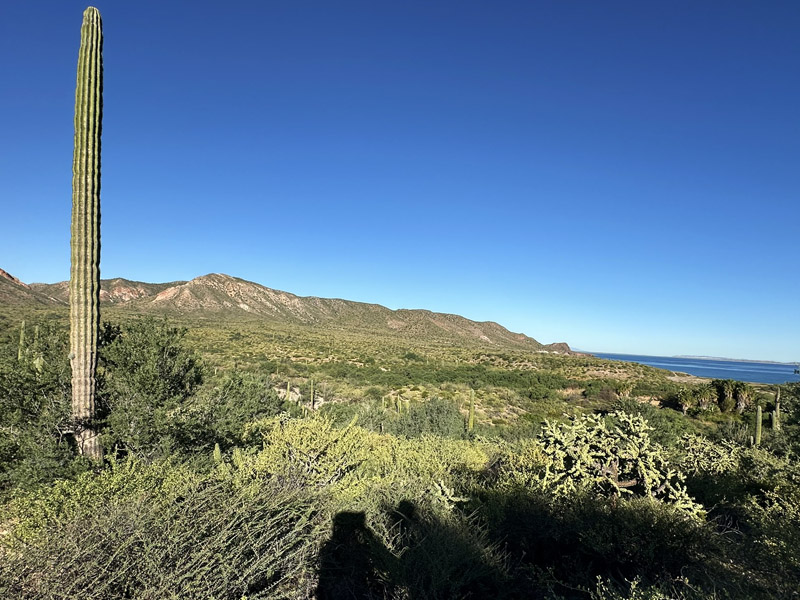
This section contains entries about our botanizing in Baja California written for the UC BEE (Oct 2012 to Aug 2021)
and The UC Hive (2022-), monthly newsletters for volunteers and staff of the UC Berkeley Botanical Garden.
Click on any photo for a larger image.
THE HIVE DEC 2025
Mulegé Return — Oct - Nov
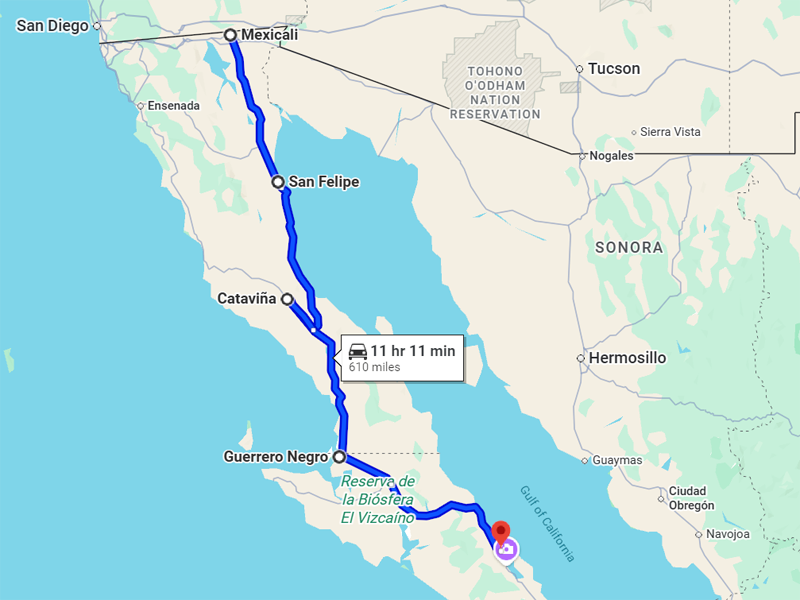 Cataviña, BC
On my way south via the Gulf Coast and San Felipe, once I reached the junction with Hwy 1 at Laguna Chapala, I decided to make a short detour, backtracking about 35 minutes north on Hwy 1 to Cataviña so that I could spend a few nights camping.
I love Rancho Santa Inés and it's proximity to some boulder fields and an arroyo. I was hoping for signs of the little bit of rain that most of the peninsula had received in late September from a Pacific hurricane/tropical storm. There obviously had been some rain on the Gulf side from Mexicali south beyond San Felipe, but not much. There were a lot of green shrubs, but not really much was blooming and there wasn't a lot of new groundcover. Maybe by January...
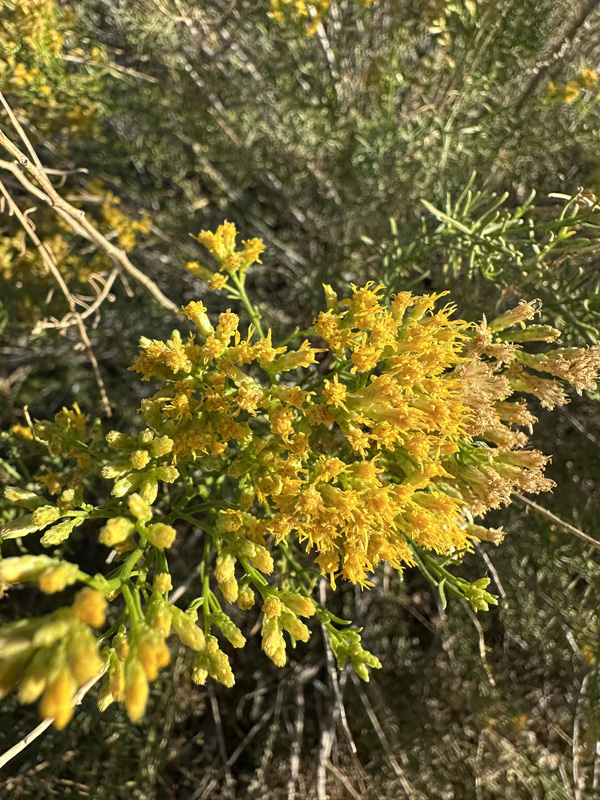
Cataviña was also quite dry, drier than I'd expected. Mostly there were some composites in bloom, such as Brittlebush, Triangle Goldeneye and a few other species I didn't stop to inspect.
For previous Cataviña posts, see: Central Baja Plants; July 2015; June 2019; and April 2025.
For a full list of this month's plants and other organisms (with family, latín name and common names in both English and Spanish), visit this page.
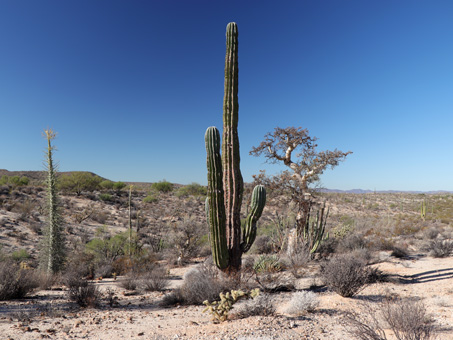
While always interesting and picturesque, the desert was drier than I had hoped it would be. At least the Boojum and Copalquín had leaves.
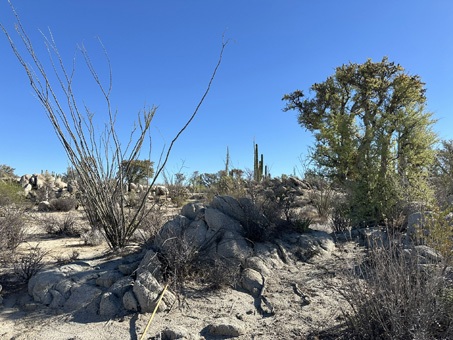
I am always amazed at how nature and the elements act to keep the scrub here looking well-groomed, as if the gardeners had just left.
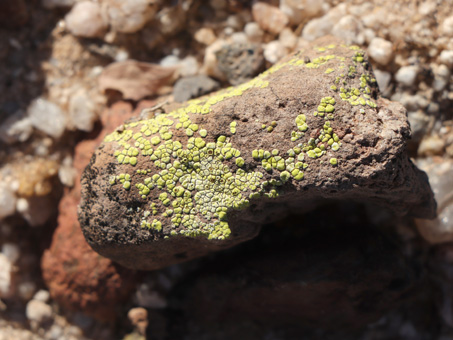
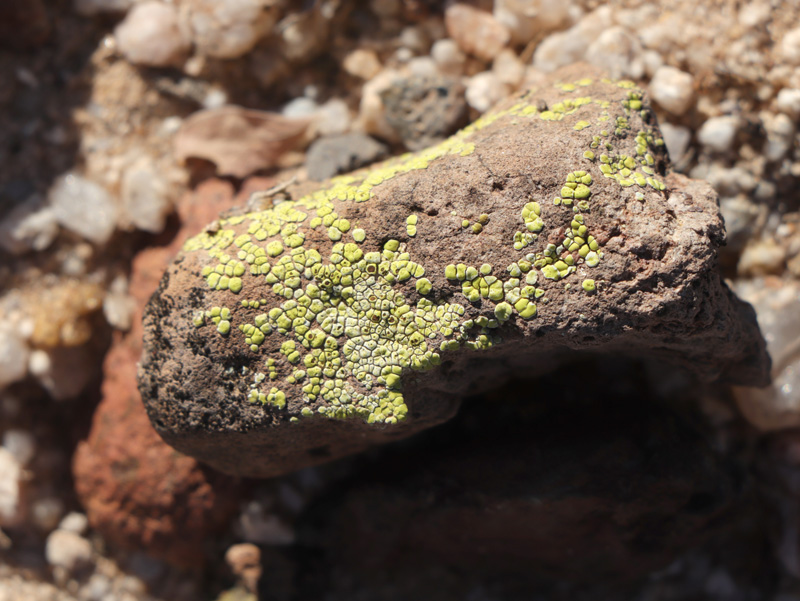
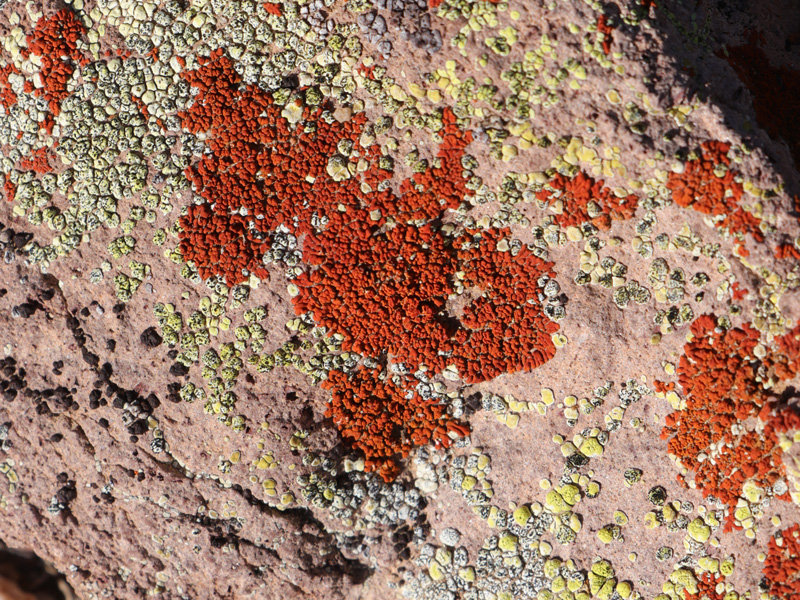
There was probably more color from all of the crustose lichens than the plants, such as Bright Cobblestone Lichen (Acarospora socialis).
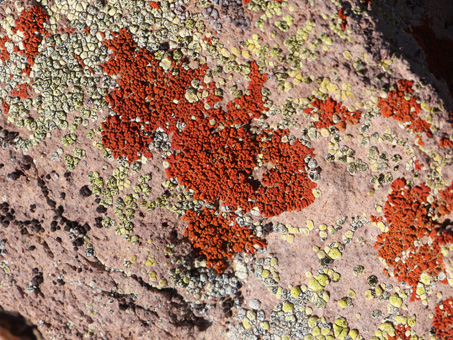
The hard-to-miss Rock Jewel Lichen (Calogaya saxicola) is common. I've seen patches from a few millimeters to 30+ cm across.
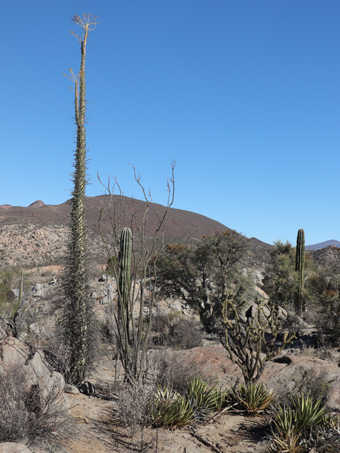
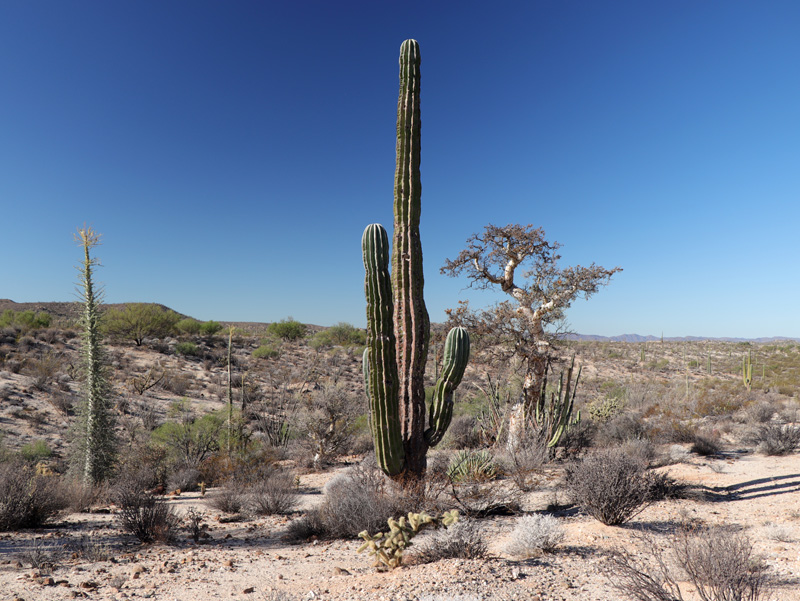
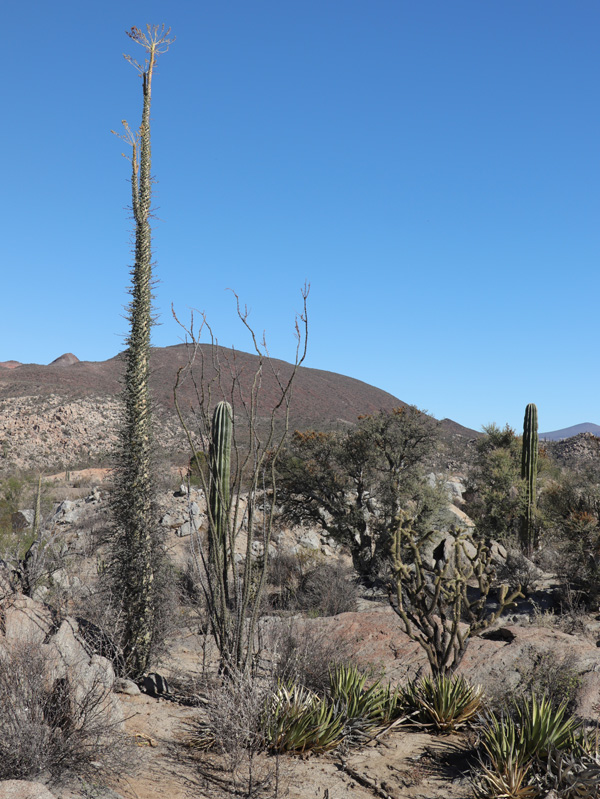
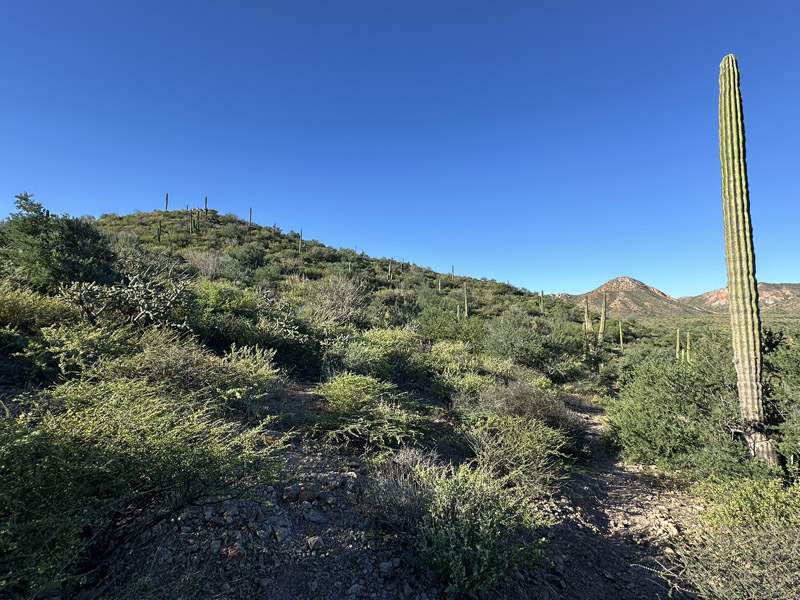
Boojum / Cirio (Fouquieria columnaris), Ocotillo (F. splendens) and a small Elephant Cactus / Cardón (Pachycereus pringlei) at left. Copalquín (Pachycormus discolor var. pubescens) is a tree in the center. Colonial Desert Agave (Agave deserti var. deserti) are in front.
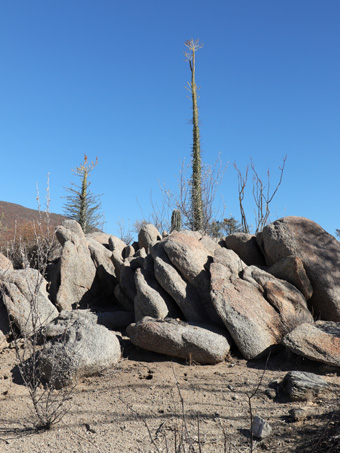
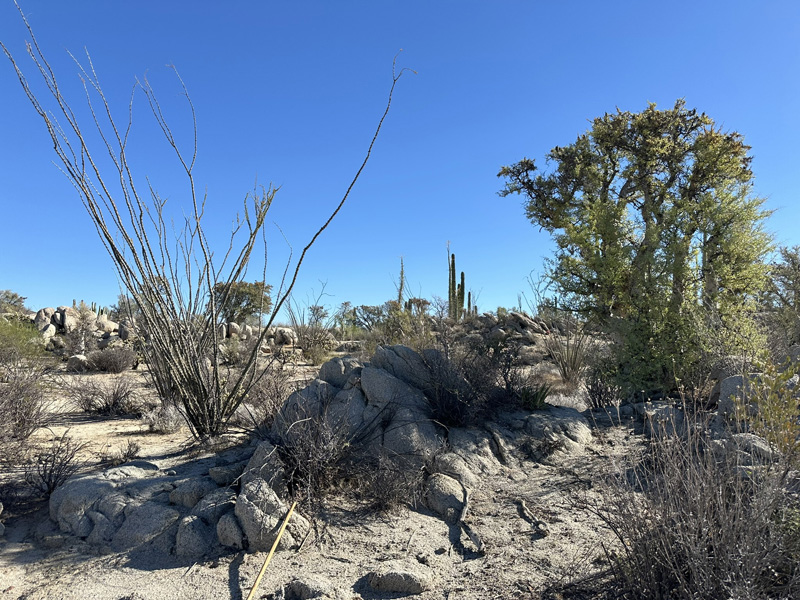
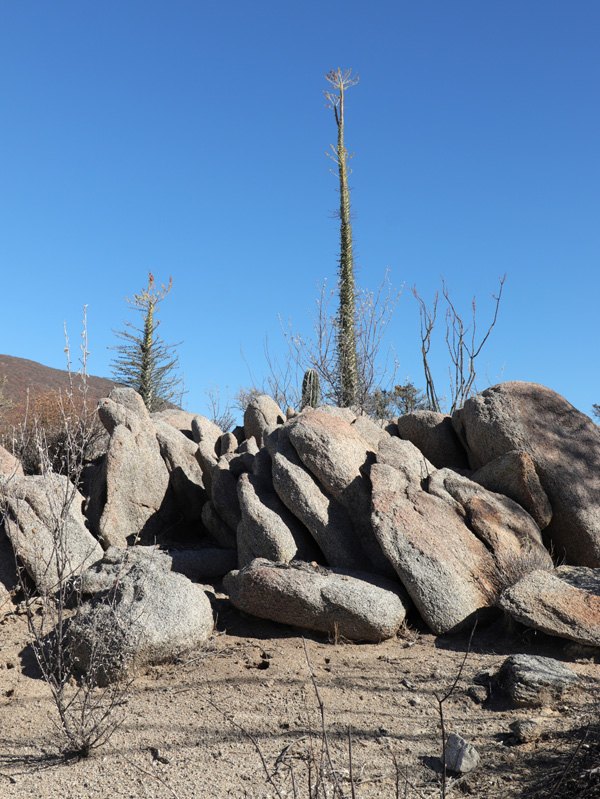
The tonolite (granitic) boulders are weathered and shaped mainly by wind but cracked by the heat/cold cycles of this area located at an elevation of about 1,950 ft (590 m). They are so interesting.
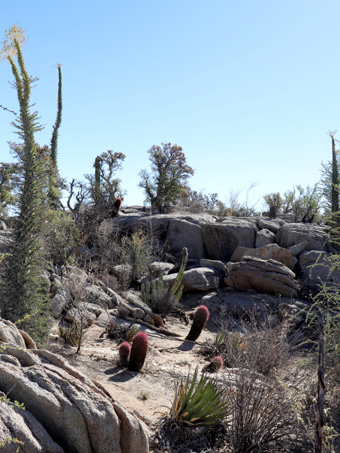
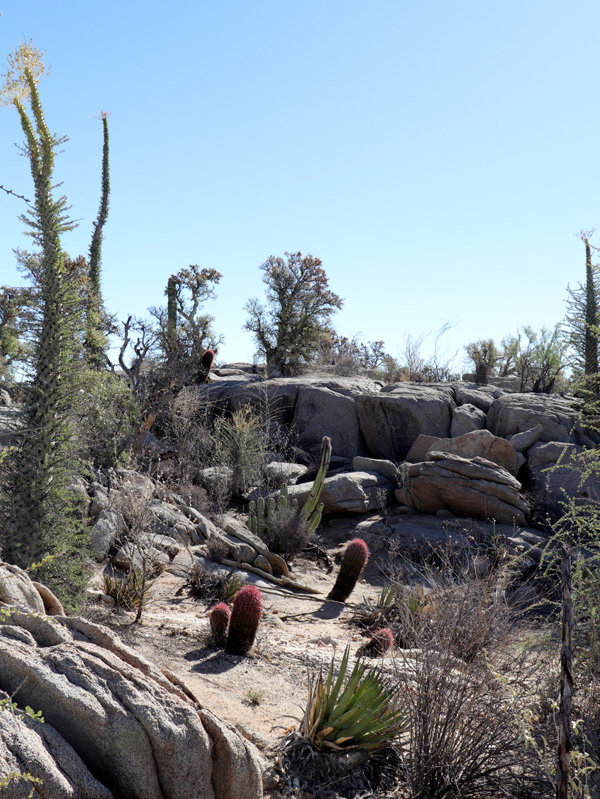
A grotto-like area deep in the boulders. Here, a number of Barrel Cactus (Ferocactus gracilis) glow red in the morning sunlight. So many different species included.
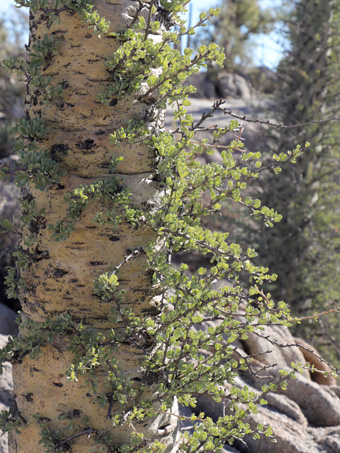
The Boojums / Cirios were one of the few obviously leafy species. The side branches are stiff and pointy. Flowers occur in the upper branch tops in the summer.
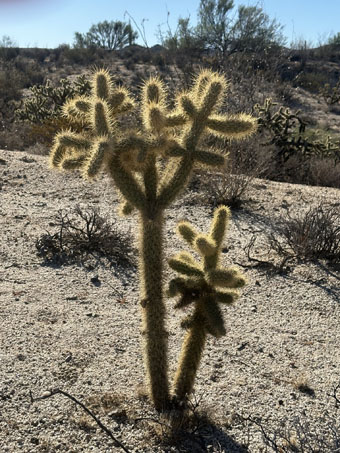
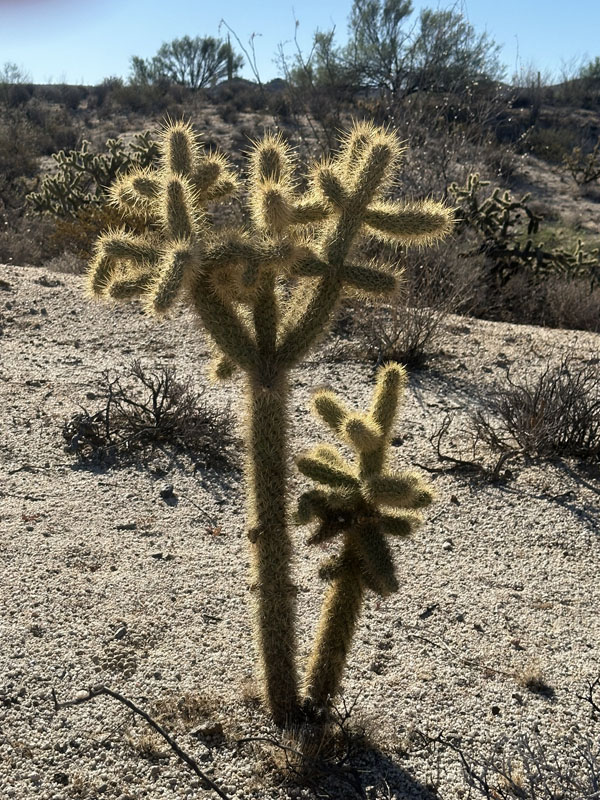
Spines of the endemic Peninsular Cholla / Cholla Barbuda (Cylindropuntia alcahes var. alcahes) catch the morning sunlight.
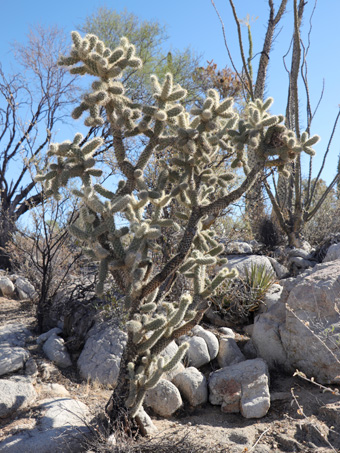
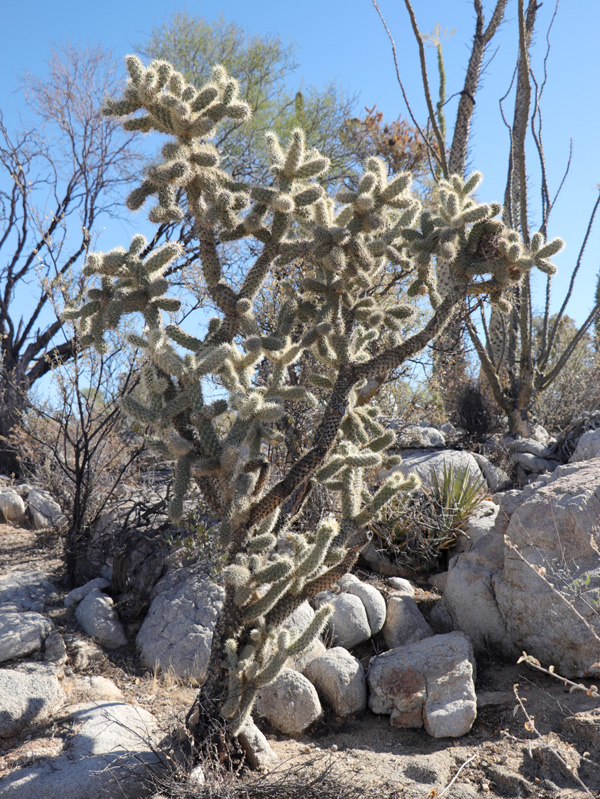
Peninsular Cholla is such a variable species that it can be confusing to ID. This one is about 2 m and like a small tree. Flowers range from yellow to burgundy.
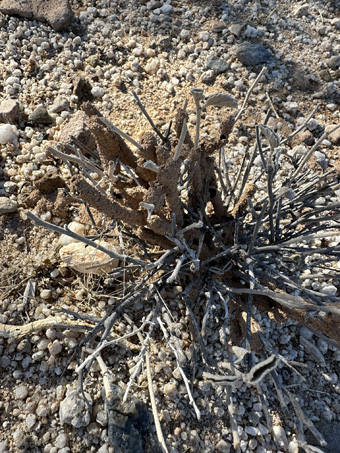
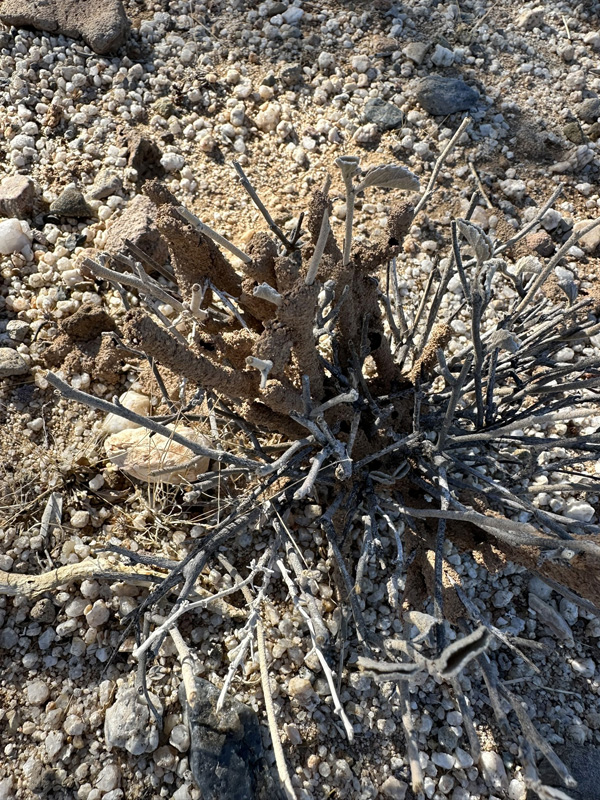
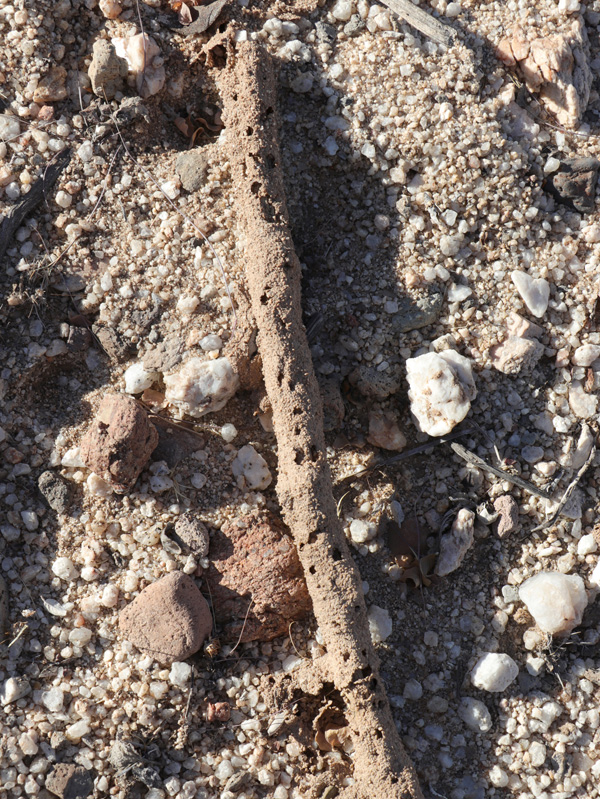
Dead stems of some shrubby species, some of them covered by termite tubes. Subterranean termites create the tubes by binding soil and wood particles with saliva.
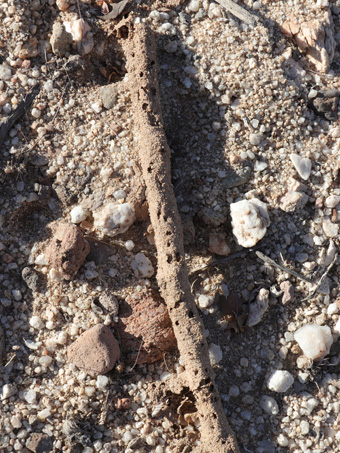
The tubes allow the termites to move between the nest and food sources while also protecting from dry conditions and predators. This is a small stick that was lying on the ground and covered with the tube.
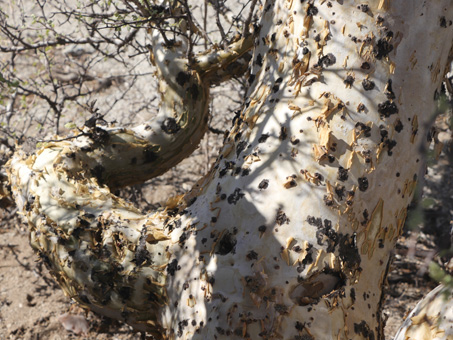
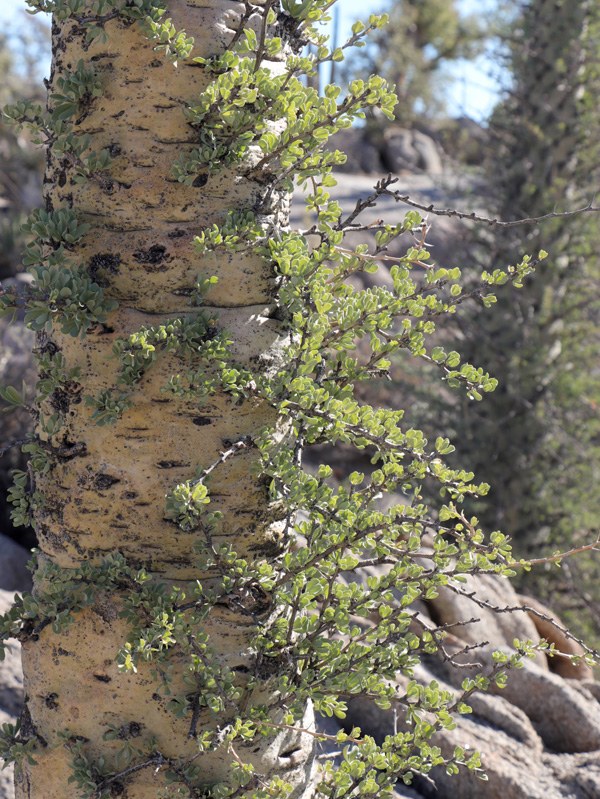
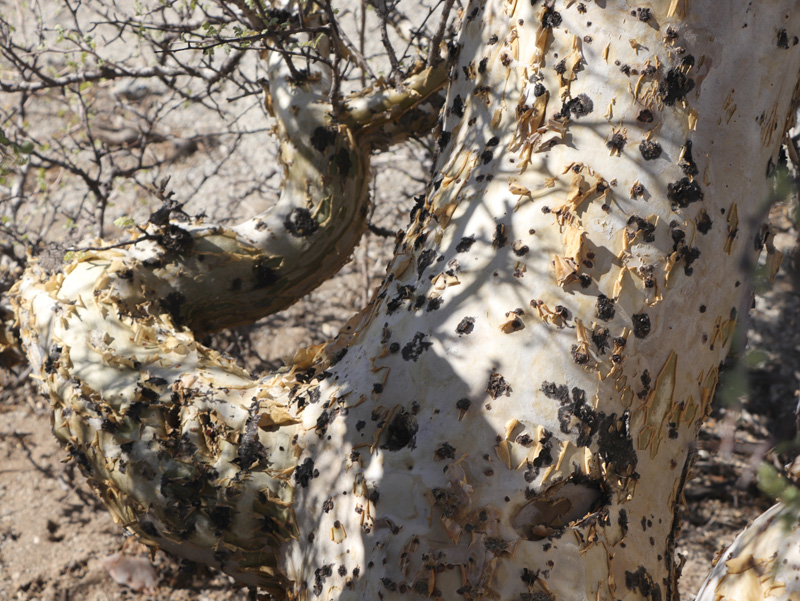
Closeup of the peeling, white to yellow bark of Copalquín (Pachycormus discolor var. pubescens).
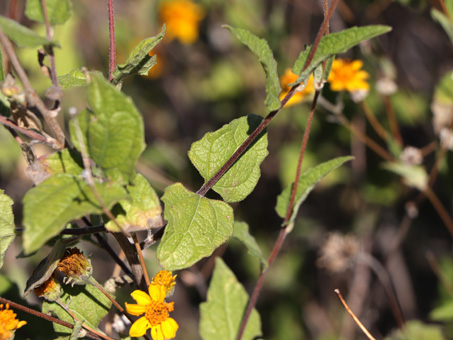
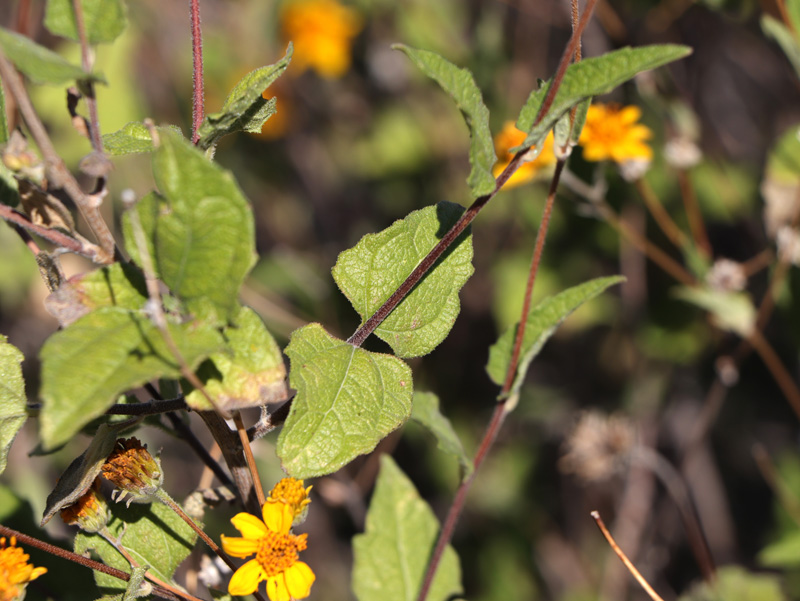
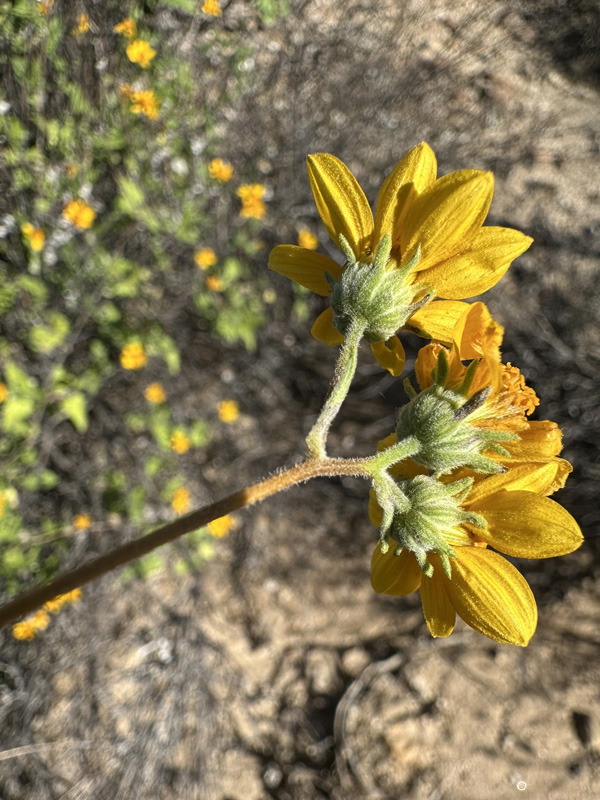
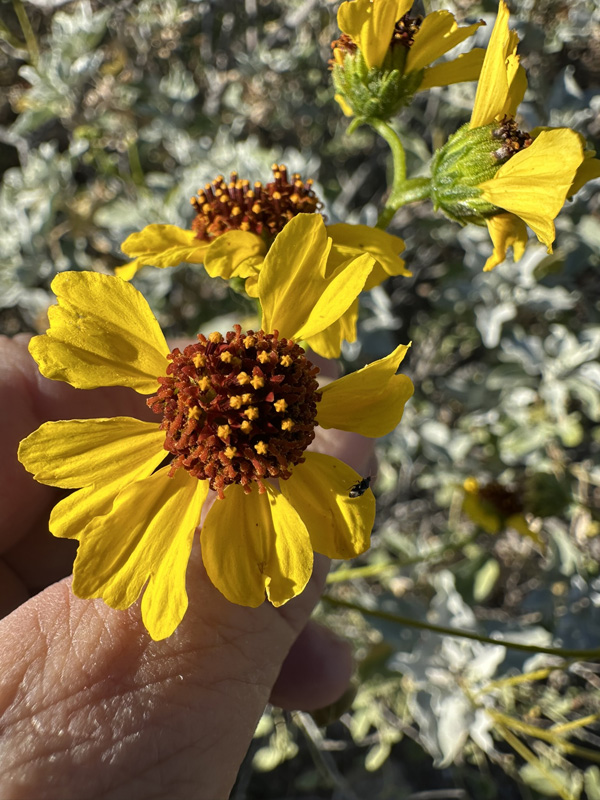
Triangle or Baja California Goldeneye (Bahiopsis triangularis) was one of the few species in flower, and it was doing so sparingly and with not many leaves.
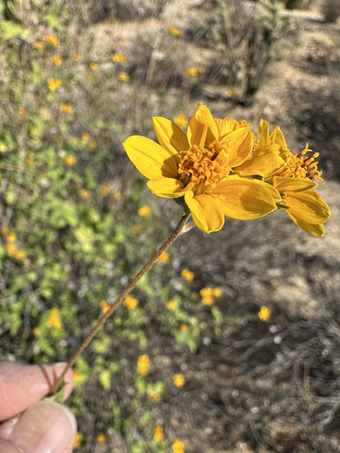
This was one of the few bushes of Baja California Goldeneye that I saw that was leafy with lots of flowers.
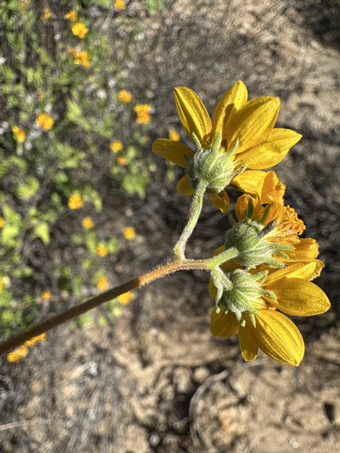
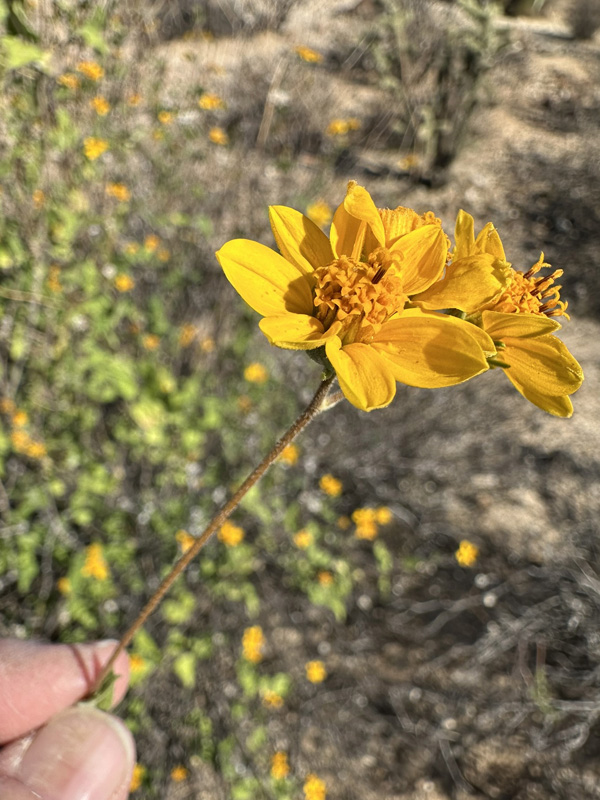
The flowers are c. 1.5-2 cm D and occur in few-flowered cymes at the ends of long peduncles.
I was surprised by how few composite species were blooming because the Fall months are usually a prime season for them, even when there has been little or no rain. I only saw one California Trixis plant (Trixis californica var. californica) with one flower! The San Diego Goldeneye (Bahiopsis laciniata) and the endemic Central Desert Encelia (Encelia asperifolia) that had colored the area with copious blooms on my last visit were mostly dry and had very few leaves and almost no flowers. There were a few Sweetbush individuals (Bebbia juncea var. juncea) with a few flowers, but most flower heads were in seed.
Mulegé, BCS — Early November
The peninsula experienced a number of hurricanes and tropical storms in late summer, with several intense ones thankfully either blowing past or doing minimal damage compared to what the state had been prepared for. However, two back to back storms in late September did drop a substantial amount of preciptation in the south and central peninsula, including the Mulege region.
The day I arrived, I ran into a friend who told me that on her daily walks by her home near Punta Prieta, she was seeing plants she didn't remember having seen in the 30-plus years she had lived here. Or, at least, she added, that she hadn't noticed before; the vegetation was so dense and flowers profuse that they were hard to miss. We made a date to go on a plant walk and most of the photos below are from that walk just a few days after I arrived.
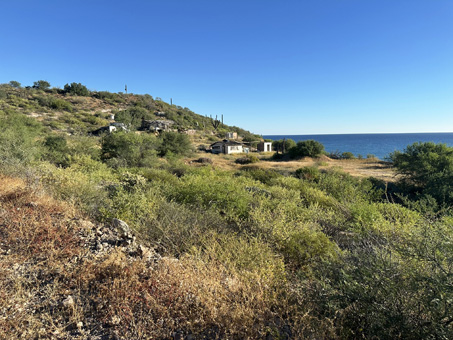
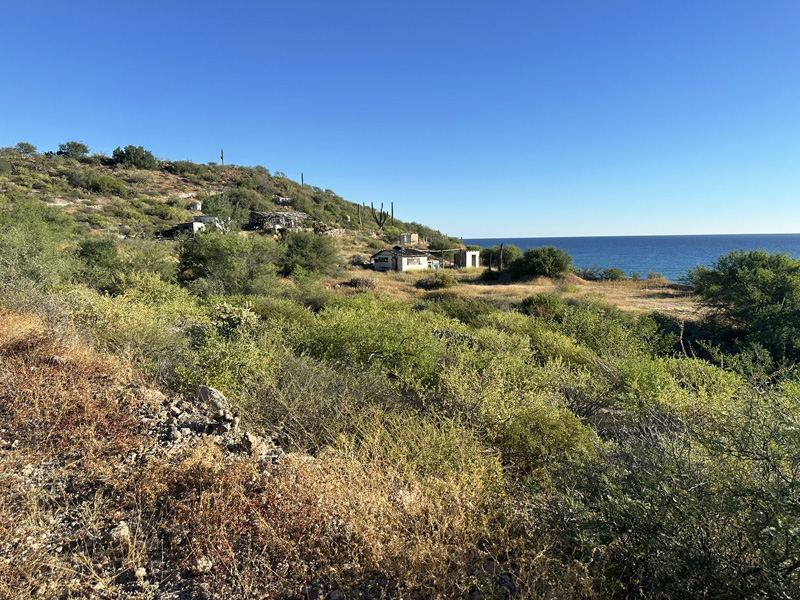
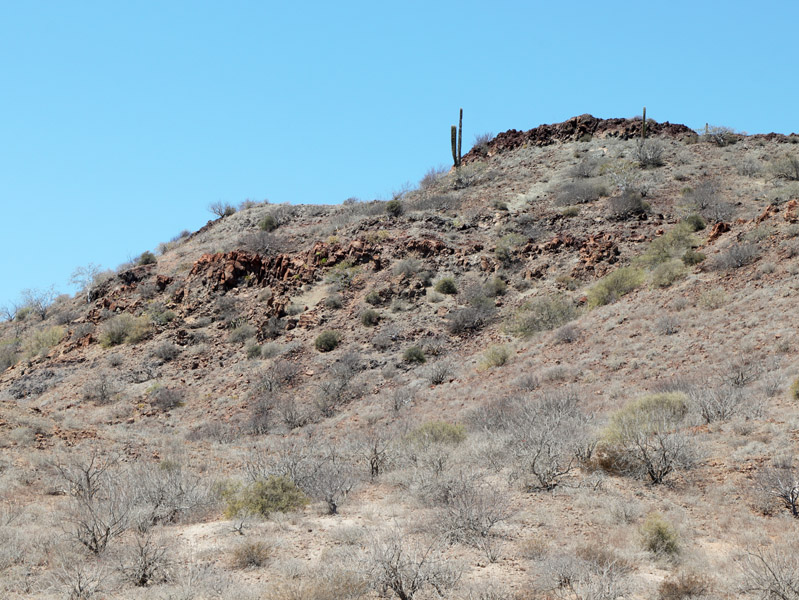
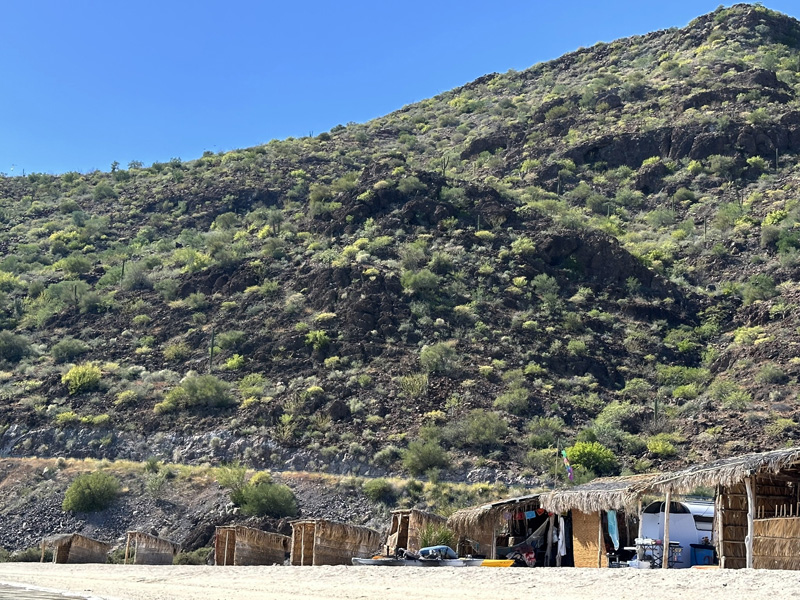
View of the south end of Punta Prieta, Mulegé. Trees & shrubs were leafy & robust while annuals & perennial herbs formed dense cover.
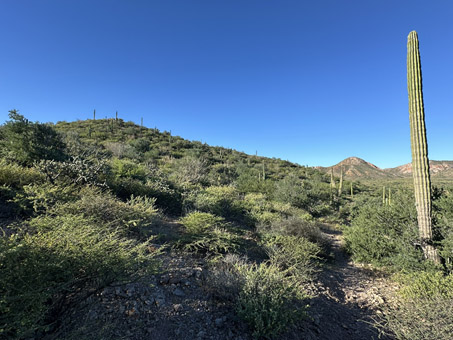
Another view of the lush hillsides around Punta Prieta. This is the NE side of the hill. The peak in the distance (west) is Cerro Rojo.
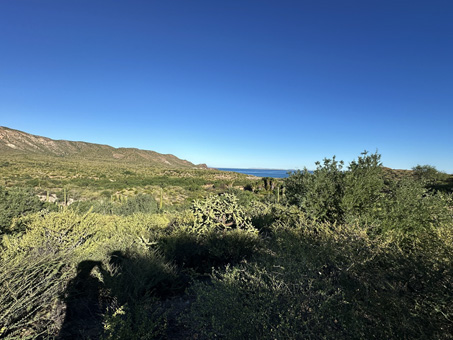
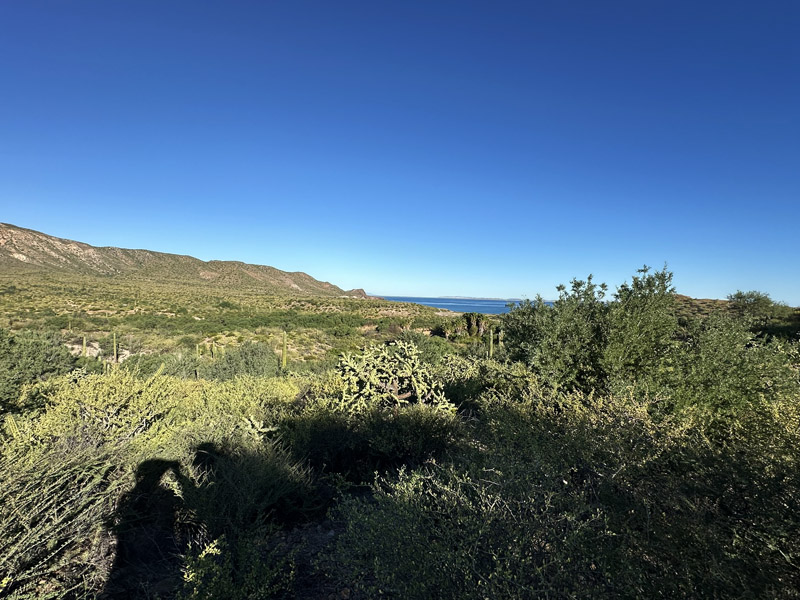
A little past the crest of the trail as we descended down towards the alluvial fan we looked out at Punta Colorado & Punta Chivato (north).
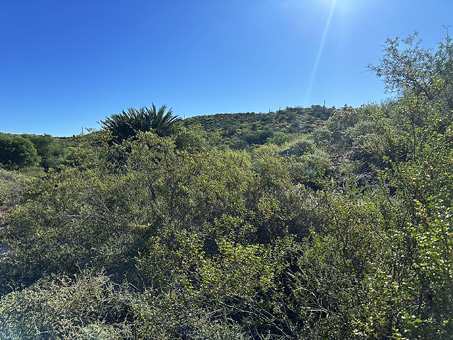
Here we are farther down the trail near the bottom of the hill looking up the slope to the east.
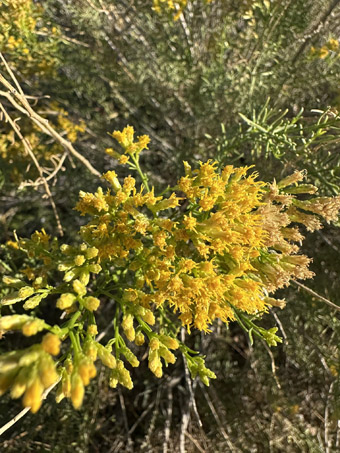
Sonoran Goldenbush (Gundlachia diffusa) here is usually found near the coast, like on this bluff.
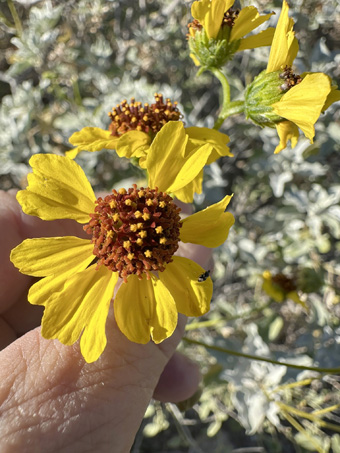
The Brittlebush (Encelia farinosa var. phenocodonta) along the trail were just getting started flowering.
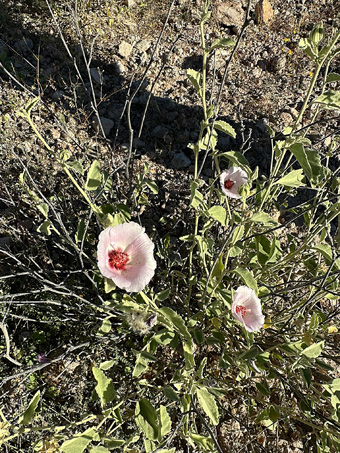
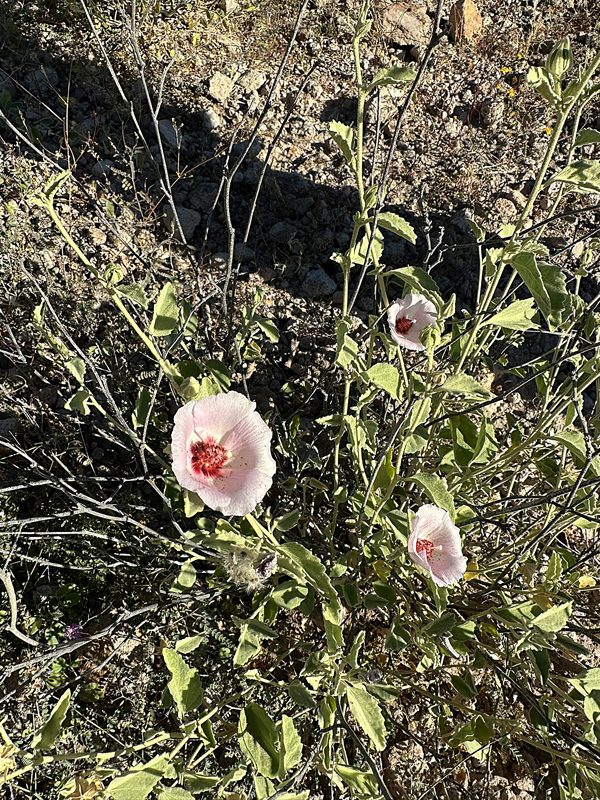
Rock Hibiscus (Hibiscus denudatus) is a small shrub that is common on rocky hillsides and bajadas.
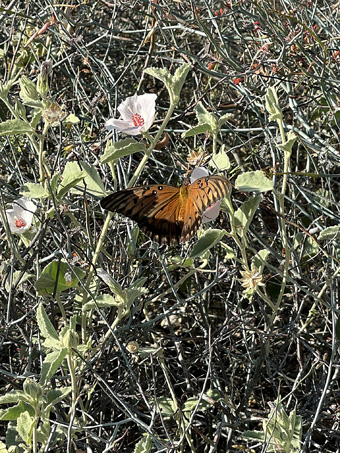
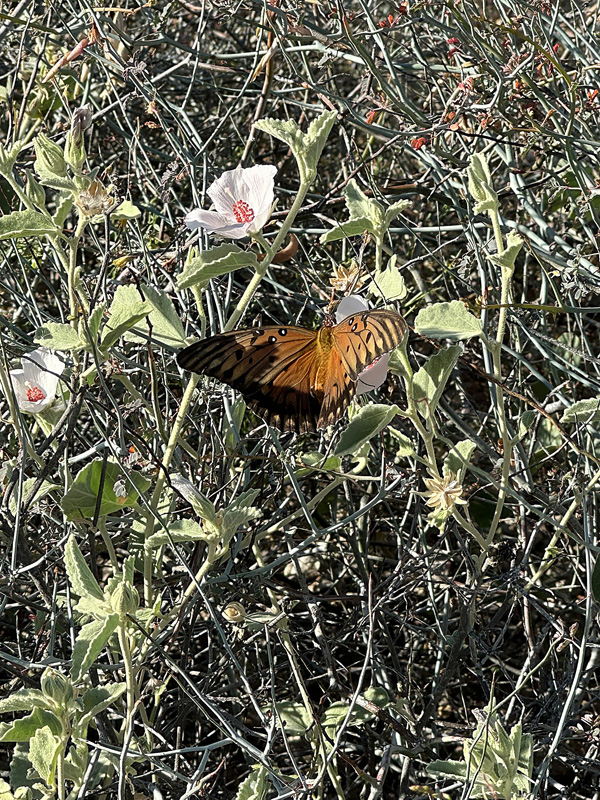
Gulf Coast Frittilary butterflies were abundant all over the area & in my garden. Local Passion Flowers (Passiflora palmeri & P. pentaschista) are the host plants. The adults feed on a wide range of species.
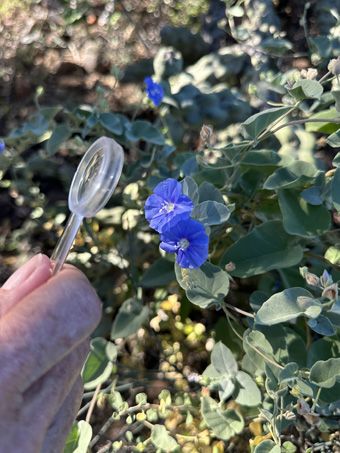
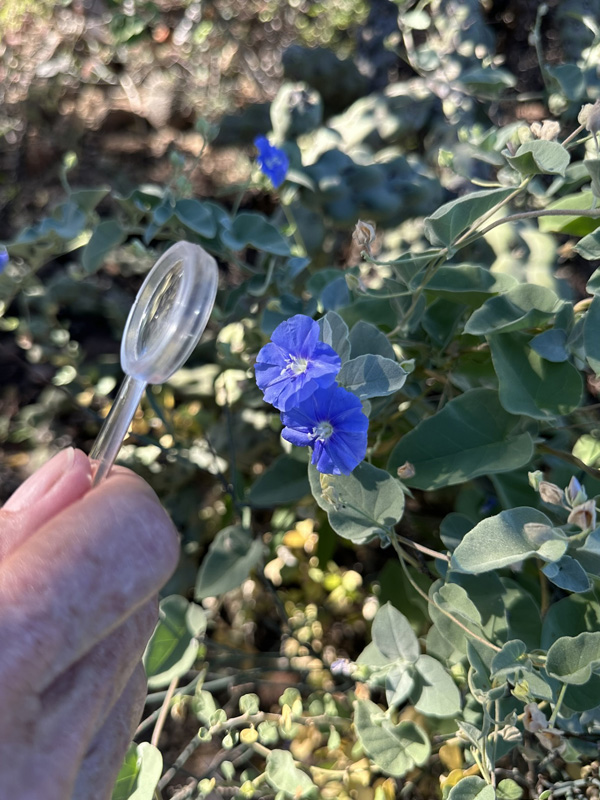
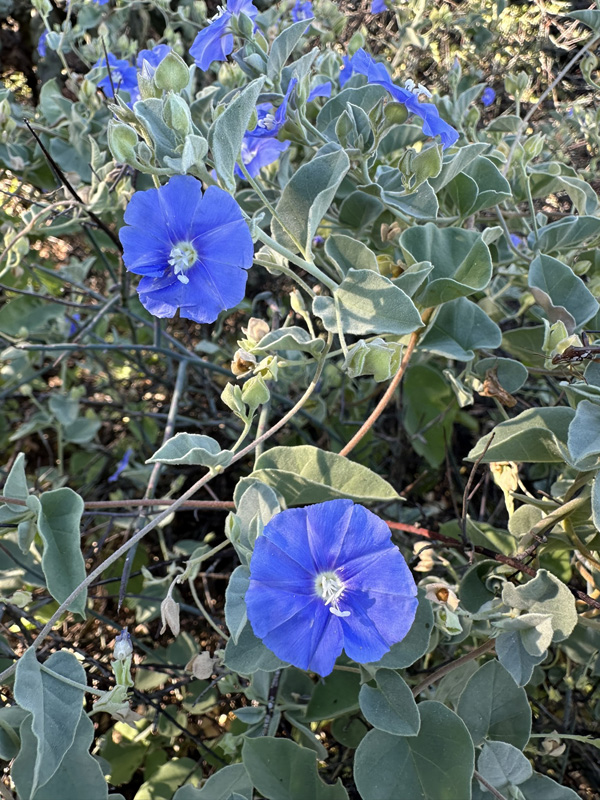
My friend looking at the details of a flower of the endemic shrub Eastwood (or Gulf) Clustervine (Jacquemontia eastwoodiana) for the first time.
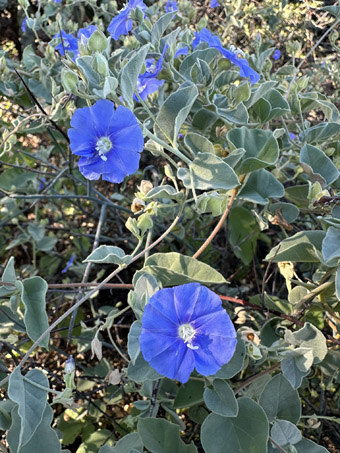
Eastwood Clustervine leaves are thick & velvety. The tubular flowers are c. 2.5 cm D. The woody vine tends to grow up within other shrubs and into trees.
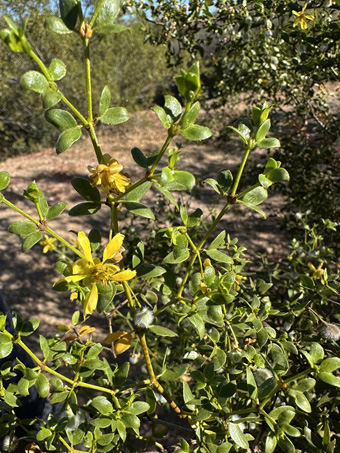
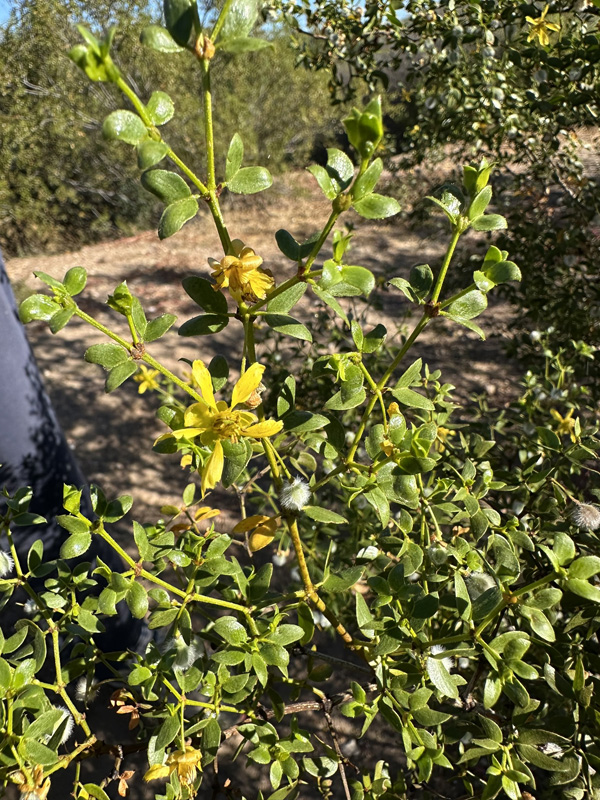
Creosotebush (Larrea tridentata). Last spring before I headed north, many of these aromatic shrubs were losing leaves which had turn olive green to brown because of the 2-3 years of drought.
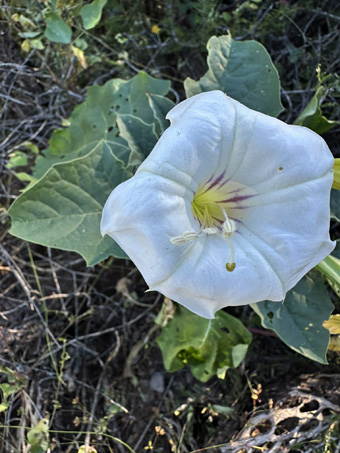
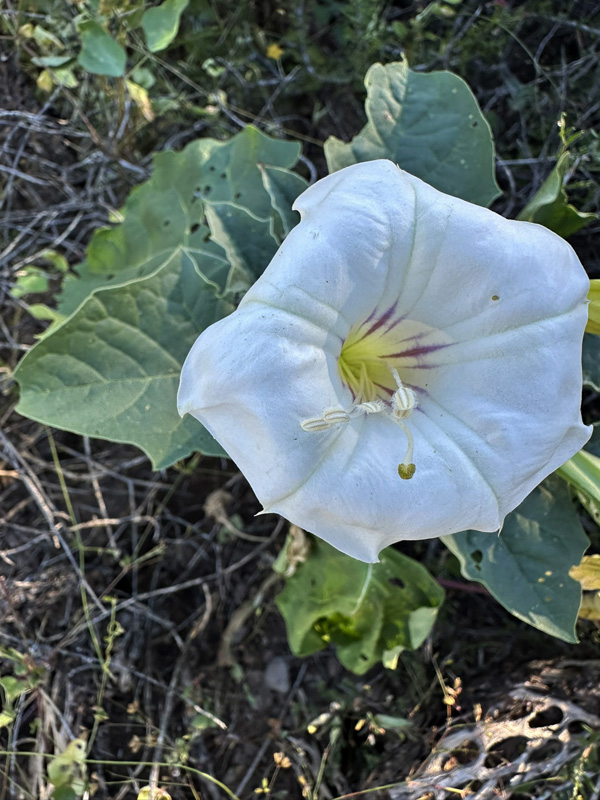
After rain, Desert Thorn-apple (Datura discolor) often goes crazy. Near the bottom of the slope, there were dozens of flowering plants. They open at night and close in the day and are bat and moth pollinated.
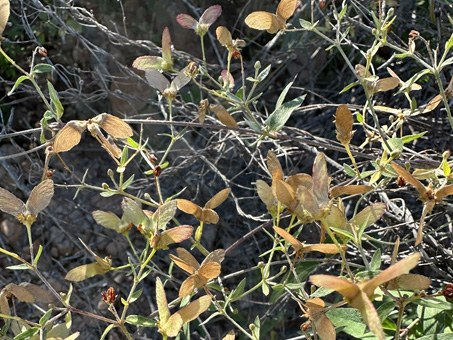
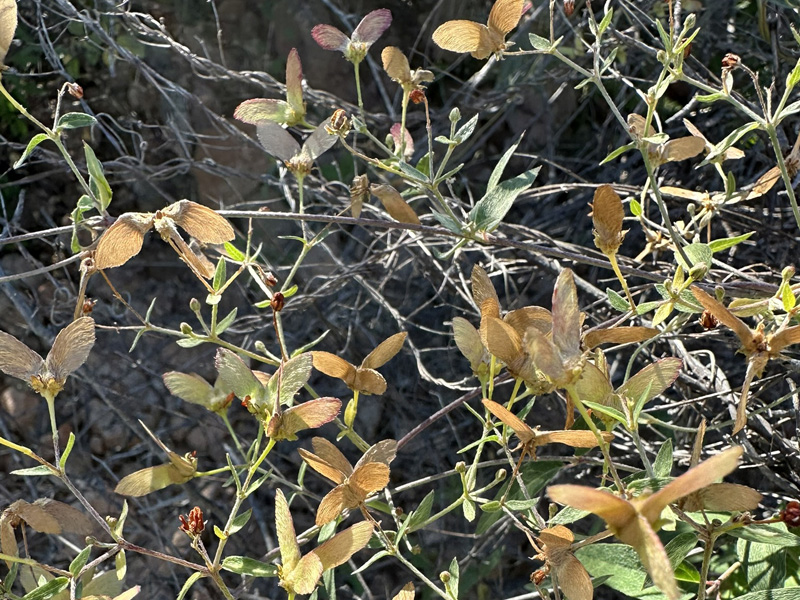
Slender Janusia (Cottsia gracilis) is a vine. The small fruit, about 2.5-3 cm D, is a 3-part propeller-like samara. When young, it's tinged red.
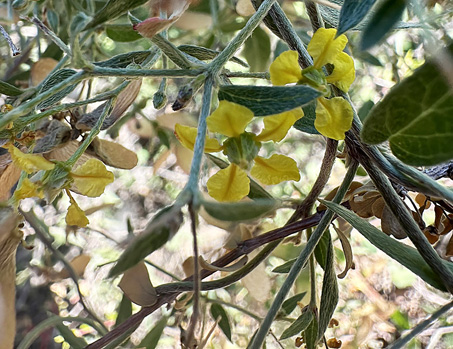
Flowers of Slender Janusia are 1.5-2 cm D. The vine can be hard to see within other plants, except when the reddish fruits are glowing.
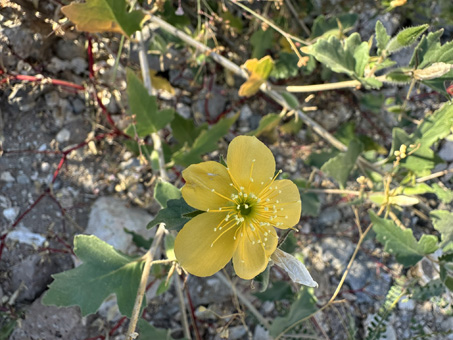
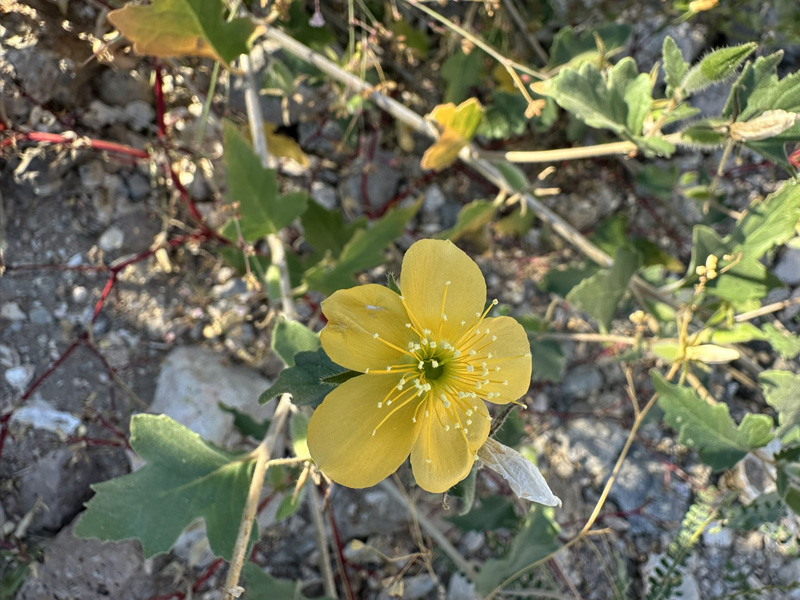
Baja California Stickleaf (Mentzelia adhaerens) is abundant now. The velcro-like herbage grabs onto everything. The flower is c. 2.5 cm D.
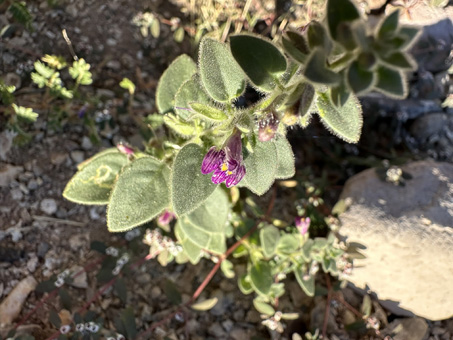
Canyon Snapdragon (Pseudorontium cyathiferum) is my favorite plant. The flowers are only c. 1 cm D and the leaves glandular-tacky.
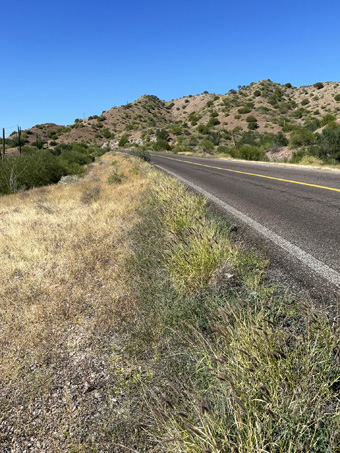
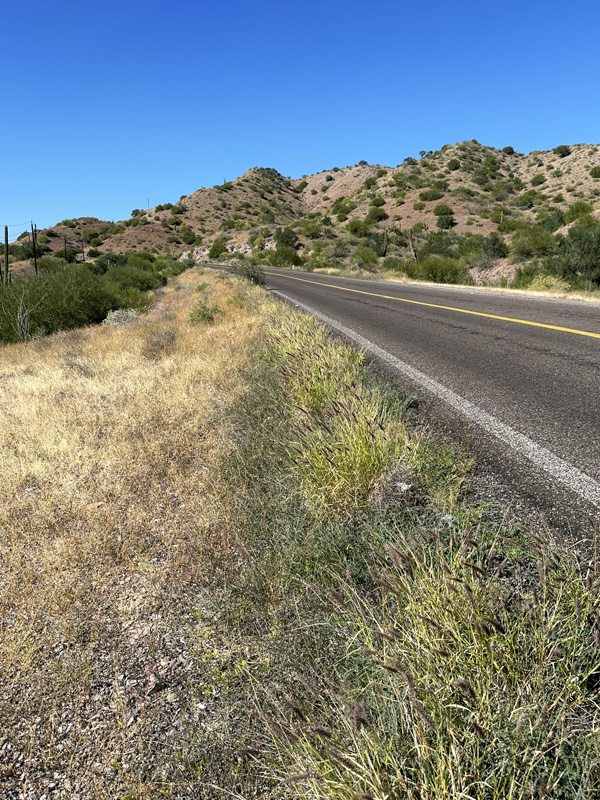
Ground cover was drying out but there were still a lot of green plants flowering along at roadsides.
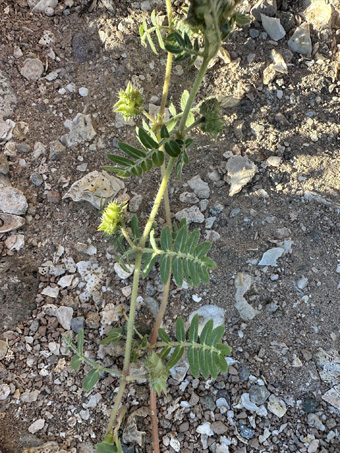
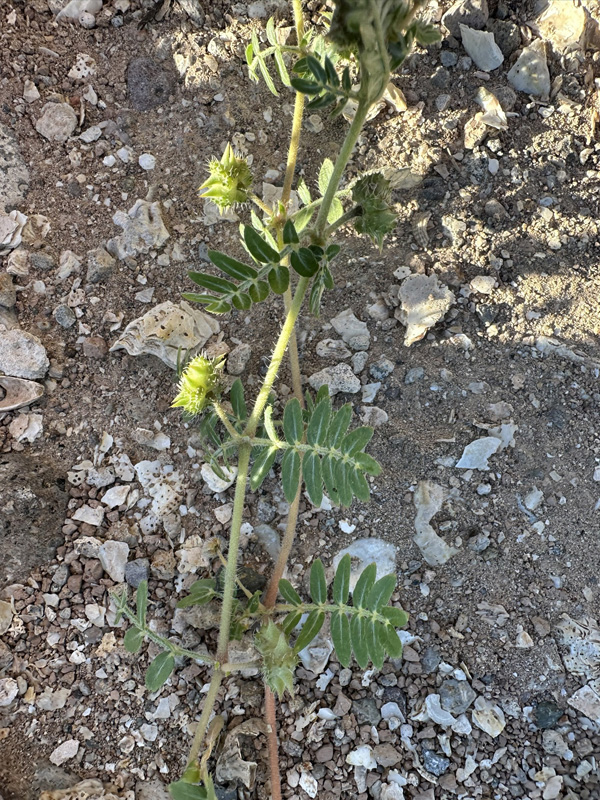
Puncturevine (Tribulus terrestris) is a non-native herb that is very invasive / widespread. The fruit have very hard, sharp spines.
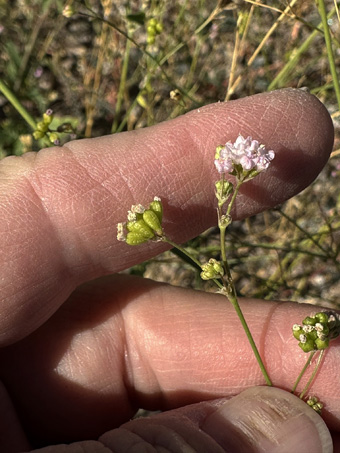
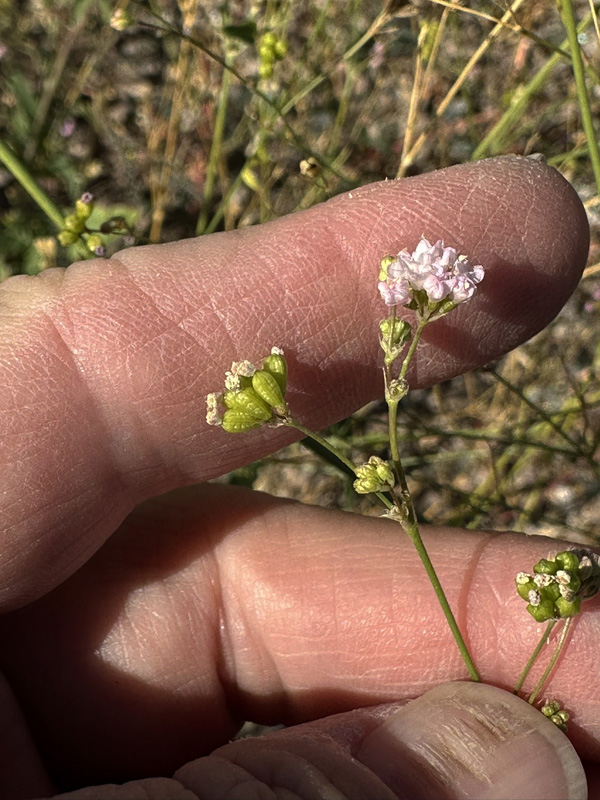
I've rarely seen Erect Spiderling (Boerhavia erecta) around here. The herbage & fruit are glandular.
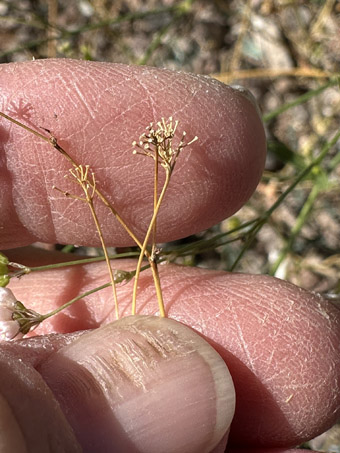
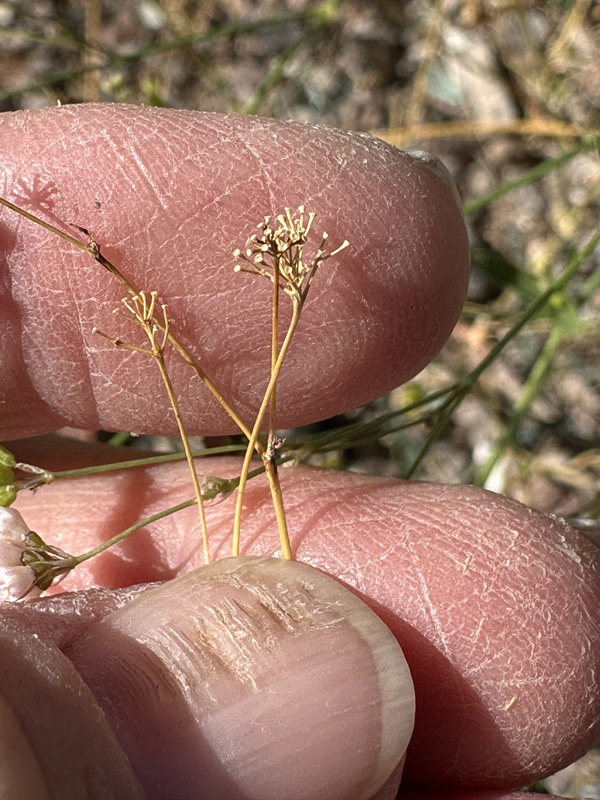
The inflorescense's umbellate structure showing after the fruit have detached, many most likely in my socks!
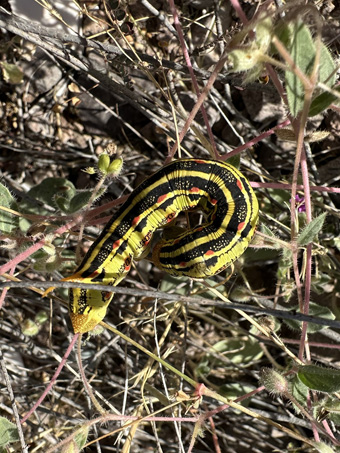
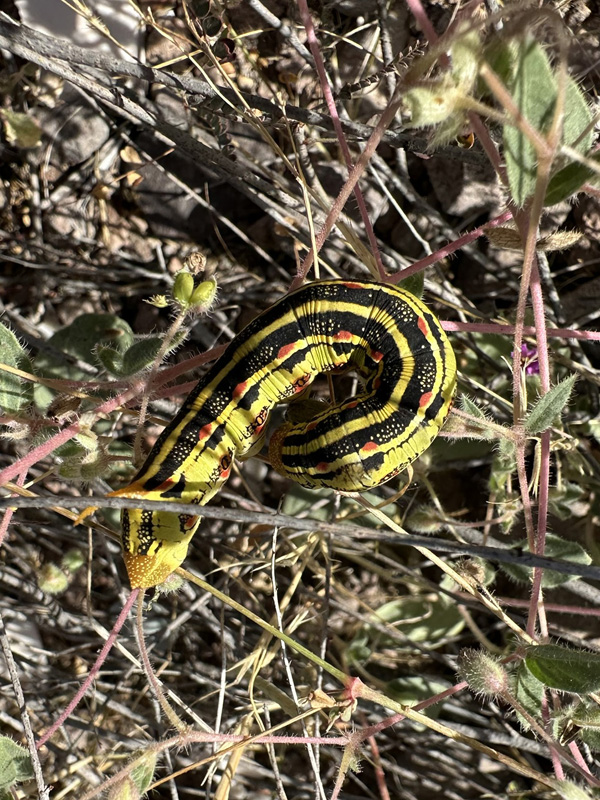
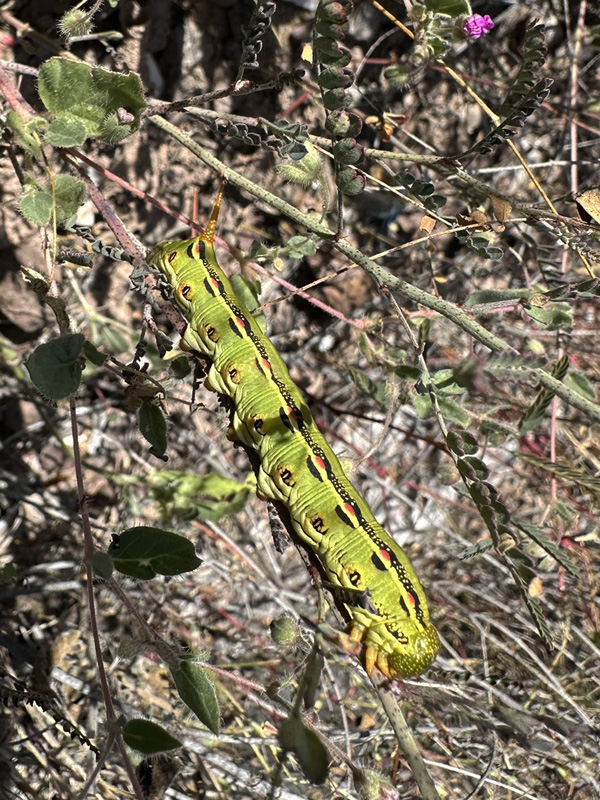
Caterpillar of the White-lined Sphinx Moth (Hyles lineata). This is about 5 cm L x 0.8 cm D.
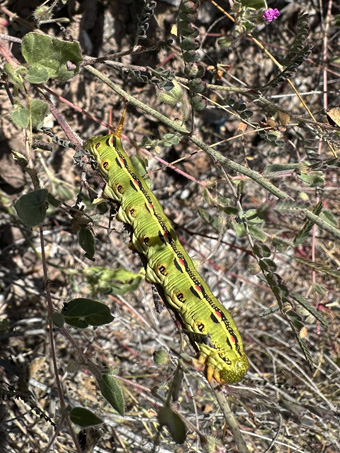
Another, slightly larger caterpillar of the White-lined Sphinx Moth (Hyles lineata), c. 6 cm L x 1.25 cm D.
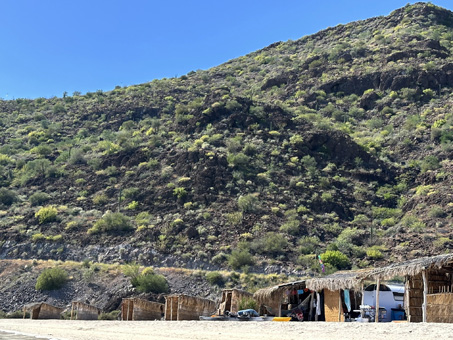
The hillsides along Bahía Concepción were also very green, the Elephant Trees, Palo Verde, Mesquite & Desert Ironwood, among other species, all full & lush.
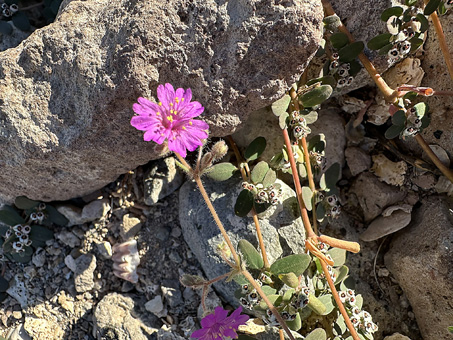
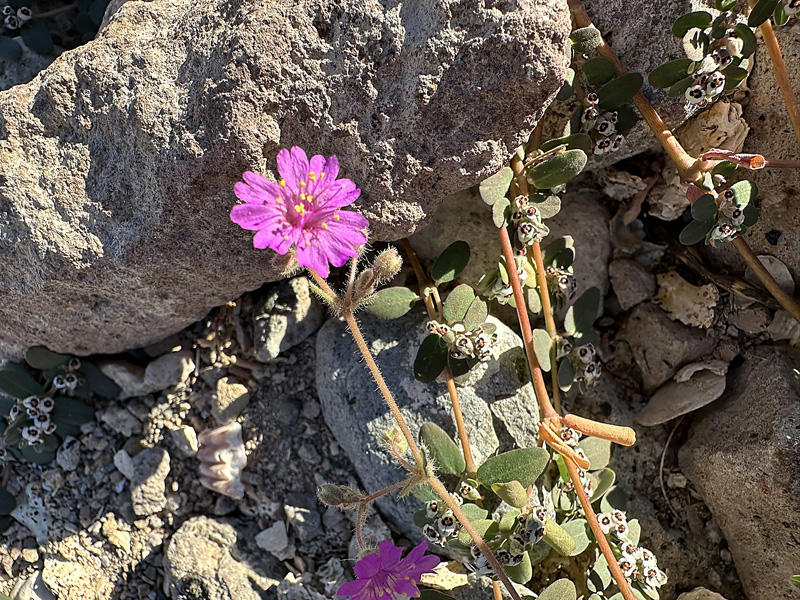
Just one example of the ground cover along the highway. Trailing Windmills (Allionia incarnata var. incarnata) & Louse Spurge (Euphorbia pediculifera).
That's it for this month, but it's just the start of what looks to be a great season of botanizing. I've been back just a month and I've gone on four hikes at three sites, lead three plant walks and took a trip up to the Sierras. So, until month, hasta pronto...see you soon.
Debra Valov — Curatorial Volunteer
For a full inventory list of this month's plants (family, latin name and common names in both English and Spanish as well as links to photos from previous posts or my iNaturalist observations), visit this page.
References and Literature Cited
Rebman, J. P., J. Gibson, and K. Rich, (2016). Annotated checklist of the vascular plants of Baja California, Mexico. Proceedings of the San Diego Society of Natural History, No. 45, 15 November 2016. San Diego Natural History Museum, San Diego, CA. Full text available online.
Rebman, J. P and Roberts, N. C. (2012). Baja California Plant Field Guide. San Diego, CA: Sunbelt Publications. Descriptions and distribution.
Valov, D. (2020). An Annotated Checklist of the Vascular Plants of Mulegé, Baja California, Mexico. Madroño 67(3), 115-160, (23 December 2020). https://doi.org/10.3120/0024-9637-67.3.115
Wiggins, I. L. (1980). The Flora of Baja California. Stanford University Press. Keys and descriptions.